Cordyline australis Can Can
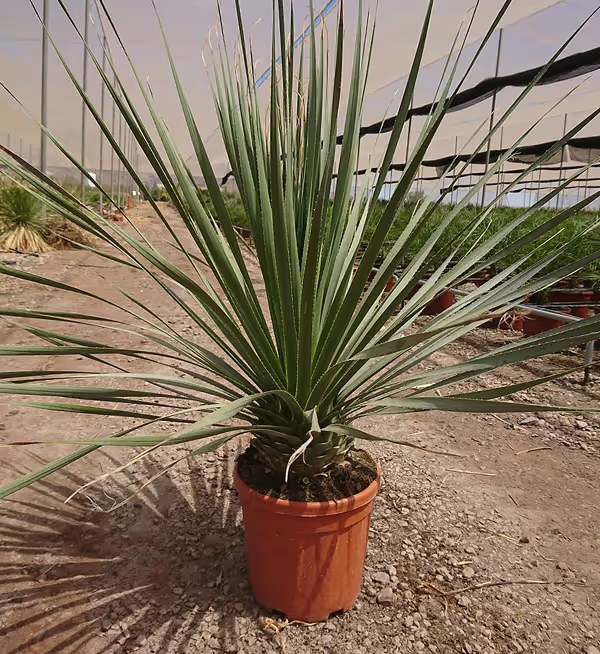
Cordyline australis 'Can Can' is a frost-resistant, evergreen shrub with an upright, clumping growth habit. This decorative, subtropical beauty is low-growing and develops multiple growth points. Its most striking feature is the dense clusters with a unique leaf color that changes over time. The sword-like leaves start with a bright pink to red color and gradually change to green and cream. The leaves are narrow and arching, with a tough, leathery texture. Cordyline australis is native to the subtropical parts of New Zealand, where it grows in coastal areas, along forest edges in high mountain forests, and along riverbanks and marshes. It tolerates dry and cold conditions well. It is a great architectural shrub for patio containers and gardens. Cordyline australis is also known as the Cabbage Palm or Good Luck Plant. Other internationally used names for Cordyline australis include: Cabbage Palm; Cabbage Tree; Giant Dracaena; Giant Dracena; Grass Palm; New Zealand Cabbage Tree; Koolboom; Koolplant; Palm Lily; tī kōuka. Evanthia has Cordyline australis 'Can Can' starting material available year-round as young plants from tissue culture. Ask our team for the Cordyline cultivation guide for commercial production. View all Cordyline varieties, trunk-forming or low-growing, in the Evanthia range.
Properties
Botanical name:
Cordyline australis
Dutch name:
Family:
Asparagaceae
Series:
Product group:
Cordyline
VBN code:
Status:
Product group:
Cool to grow
Subtropical
Cultivation information
Starting material:
Young plant from tissue culture
Pot size:
cm
Stem length:
-
cm
Cultivation location:
Plant density:
/ m²
Sowing period:
Cultivation temperature:
Pot size:
cm
Potsize
60-100
cm
Ideal cultivation temperature:
10-18
°C
Growing time to young plant:
15-18
weeks
Growing time from young plant to end product:
30
-
75
weeks
USDA Hardiness zone:
9-11
Average seeds per kilo:
The information presented here is intended as a general guideline and should not be considered instructions for cultivation. Details are based on Western European climate conditions, unless specifically stated otherwise.