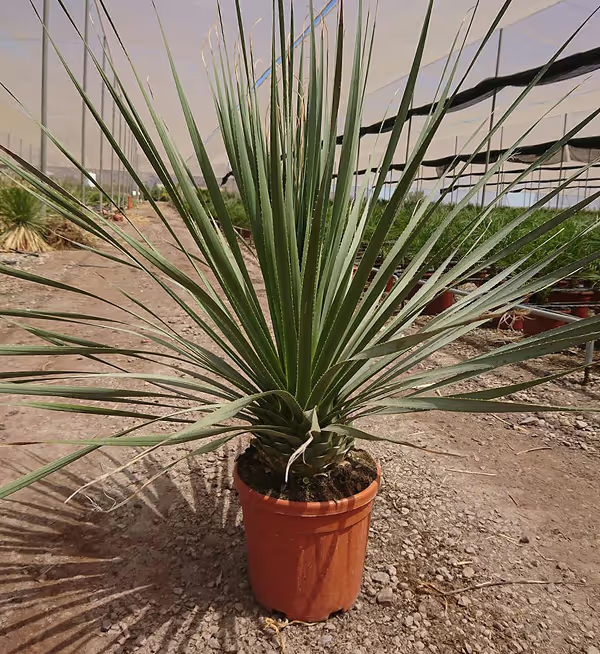
Strelitzia reginae 'Mandela's Gold'
Strelitzia reginae Mandala’s Gold, formerly known as Kirstenbosch Gold, is a rare Strelitzia reginae. This exotic foliage plant features large, upright, banana-like leaves and extraordinary flowers. Strelitzia reginae is originally a perennial plant from subtropical regions of South Africa. There, it grows in rocky grasslands, coastal scrub, and along sunny riverbanks. Strelitzia reginae is the most common and widely used species for pot plant and cut flower production. It makes an excellent houseplant and can be placed outdoors during warmer periods. Strelitzia reginae produces striking yellow/blue flowers, nestled within its broad, grey-green leaves. Under the right conditions, these flowers appear 3 to 5 years after the seeds germinate. Strelitzia reginae is also known as the Bird of Paradise plant. Other internationally used names for Strelitzia reginae include: Bird of paradise; Queen's bird-of-paradise; Ave del paraíso; Strelitzia; Paradiesvogelblume; Strelitzie; Bird of Paradise Flower; Bird's Tongue Flower; Crane Flower. Evanthia has starting material of Strelitzia reginae Mandala’s Gold available year-round, as seeds and young plants from seed. Growing plugs from Strelitzia seeds can be quite a challenge. Evanthia has extensive experience and is happy to do the work for you. For a quick and easy start, order Strelitzia young plants. Ask our team for the Strelitzia cultivation manual for commercial production. View all Strelitzias in the Evanthia assortment.
Properties
Botanical name:
Strelitzia reginae
Dutch name:
Family:
Strelitziaceae
Series:
Product group:
Strelitzia
VBN code:
Status:
Product group:
Air purifying
Subtropical
Cultivation information
Starting material:
Seed
Young plant from seed
Pot size:
cm
Stem length:
-
cm
Cultivation location:
Plant density:
/ m²
Sowing period:
Cultivation temperature:
Pot size:
cm
Potsize
40-250
cm
Ideal cultivation temperature:
20-22
°C
Growing time to young plant:
14-16
weeks
Growing time from young plant to end product:
25
-
78
weeks
USDA Hardiness zone:
10-12
Average seeds per kilo:
5800
The information presented here is intended as a general guideline and should not be considered instructions for cultivation. Details are based on Western European climate conditions, unless specifically stated otherwise.